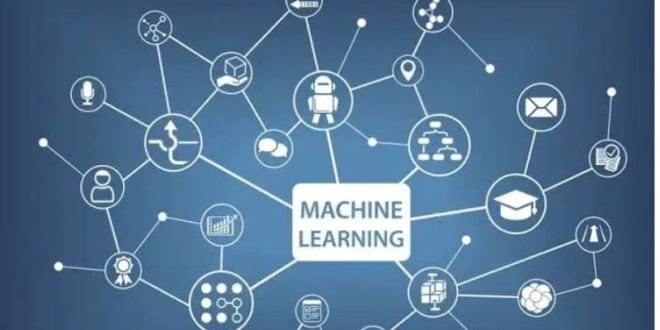
Machine learning is transforming how computers process information, recognise patterns, and make predictions. It powers many services people use every day, including email spam filters, shopping recommendations, banking security systems, and healthcare applications. But what is machine learning, and how does it actually work? It is a branch of artificial intelligence that enables computers to learn from data and improve their predictions without requiring specific instructions for every task. Understanding its working process, different types, and real-world applications helps explain how this technology solves practical problems and supports decisions across different industries.
What is Machine Learning?
Machine learning is a branch of artificial intelligence (AI) that enables computers to learn from data, recognise patterns, and make predictions without requiring separate instructions for every task.
Traditional computer programs follow rules written by developers. Machine learning systems, on the other hand, use examples and past information to identify patterns and improve their results. For example, an email service can analyse thousands of messages to identify common features of spam. It then uses what it has learned to classify new emails automatically.
Machine learning is now used in search engines, banking applications, online shopping platforms, healthcare systems, social media, and many other services. It helps organisations process information, automate tasks, and make data-based decisions.
How Does Machine Learning Work?
Machine learning works by training a computer model with data. The model identifies relationships within that information and uses them to make predictions about new data.
The process generally involves six steps:
- Data collection: Information is gathered from databases, websites, applications, sensors, images, or other sources.
- Data preparation: The collected information is cleaned to remove errors, duplicate entries, and irrelevant details.
- Algorithm selection: Developers choose an appropriate machine learning algorithm based on the problem they want to solve.
- Model training: The algorithm processes the training data and learns patterns or relationships.
- Model testing: The trained model is evaluated using separate data to check how accurately it handles information it has not previously encountered.
- Prediction and improvement: The model produces results. Developers monitor its performance and update it when necessary.
Example: Imagine an online property platform that wants to estimate house prices. It can train a model using information about property size, location, age, and previous selling prices. After learning from these examples, the model can estimate the price of another property.
The quality of the results depends on the data, algorithm, training process, and regular evaluation.
What Are the Four Main Types of Machine Learning?
Machine learning is generally divided into four main types. Each approach uses a different method to help computers learn from information.
1. Supervised Learning
Supervised learning uses labelled data to train a model. This means the training information already includes the correct answers, allowing the system to learn the relationship between inputs and outputs.For example, a model trained with emails labelled as spam or not spam can learn to classify incoming messages.
Common applications include:
- Email spam detection
- House price prediction
- Credit risk assessment
- Medical image classification
- Customer churn prediction
Supervised learning is useful when historical examples with known outcomes are available.
2. Unsupervised Learning
Unsupervised learning uses data without predefined labels. Instead of receiving correct answers during training, the model identifies patterns, similarities, and groups within the information. For example, a retail company can use customer purchase records to group shoppers according to their buying habits.
Common applications include:
- Customer segmentation
- Grouping similar products
- Identifying unusual transactions
- Organising large datasets
This approach is particularly useful when organisations have large amounts of information but do not already know which categories or patterns exist.
3. Semi-Supervised Learning
Semi-supervised learning combines a small amount of labelled data with a larger collection of unlabelled data. Labelling information manually can be expensive and time-consuming. This approach helps reduce that requirement while still giving the model useful examples to learn from. It is used in areas such as image classification, speech recognition, and medical image analysis.
4. Reinforcement Learning
Reinforcement learning allows a computer system to learn through actions and feedback. It receives rewards for successful actions and penalties for unsuccessful ones. Over time, the system learns which actions are more likely to produce favourable results.
Examples include:
- Training robots to perform tasks
- Developing computer game strategies
- Optimising traffic signals
- Improving automated decision-making
Unlike supervised learning, reinforcement learning does not depend on a labelled answer for every individual action.
Common Machine Learning Algorithms
Machine learning algorithms are mathematical methods that help computers identify patterns and make predictions. The choice of algorithm depends on the type of data and the problem being addressed.
| Algorithm | What It Does | Common Application |
| Linear Regression | Predicts numerical values | House price estimation |
| Logistic Regression | Classifies information | Spam detection |
| Decision Trees | Makes decisions using conditions | Loan approval analysis |
| Random Forest | Combines multiple decision trees | Fraud detection |
| K-Nearest Neighbors | Classifies data using similar examples | Recommendation systems |
| Support Vector Machines | Separates data into categories | Image classification |
| K-Means | Groups similar data points | Customer segmentation |
For example, a bank may use classification algorithms to identify potentially suspicious transactions. A retail business may use clustering algorithms to understand customer groups.
No single algorithm works best for every situation. Developers compare different models and select one based on accuracy, speed, data requirements, and the nature of the task.
Difference Between AI, Machine Learning, and Deep Learning
Artificial intelligence, machine learning, and deep learning are related concepts, but they have different meanings.
Artificial intelligence (AI) is the broader field of creating computer systems that can perform tasks associated with human intelligence, such as reasoning, understanding language, and making decisions.
Machine learning (ML) is a part of AI that allows computers to learn patterns from data and use them to make predictions or decisions.
Deep learning is a specialised area of machine learning that uses neural networks with multiple layers to process complex information, including images, audio, and text.
| Artificial Intelligence | Machine Learning | Deep Learning |
| Broad field of intelligent computer systems | A branch of AI | A specialised branch of ML |
| Uses different methods, including rules and learning | Learns patterns from data | Uses multilayer neural networks |
| Includes planning and virtual assistants | Includes prediction and classification | Includes image and speech processing |
| Can work with or without machine learning | Requires data for training | Often requires substantial training data |
Generative AI is another related area. It uses trained models to create new content, such as text, images, audio, and computer code.
Real-World Applications of Machine Learning
Understanding what is machine learning used for becomes easier when you look at the services and industries that rely on it. From personalised recommendations to fraud detection, machine learning supports many everyday activities.
Healthcare
Healthcare organisations use machine learning to analyse medical images, identify patterns in patient information, and support medical research. These systems can assist healthcare professionals, although clinical decisions still require appropriate human oversight.
Banking and Finance
Banks use machine learning to identify unusual transactions, detect potential fraud, assess financial risks, and analyse customer activity. For example, a system can flag a transaction that differs significantly from a customer’s usual spending pattern.
E-commerce
Online shopping platforms use recommendation systems to suggest products based on browsing history, previous purchases, and customer preferences. Machine learning can also help businesses forecast demand and manage inventory.
Education
Educational platforms use machine learning to analyse student performance and recommend learning materials. These systems can help identify subjects where students may need additional practice.
Transportation
Transport companies use machine learning for traffic prediction, route planning, demand forecasting, and driver assistance. It can also support the development of autonomous vehicle technology.
Cybersecurity
Security systems use machine learning to identify suspicious login attempts, unusual network activity, and potential threats. This can help organisations respond to security problems more quickly.
Entertainment and Social Media
Streaming platforms recommend movies, shows, and music based on viewing or listening habits. Social media platforms also use automated systems to organise content and identify potentially harmful activity.
Benefits of Machine Learning
Machine learning offers several benefits when it is implemented with suitable data and proper oversight.
- Task automation: It can handle repetitive processes and reduce manual work.
- Faster data analysis: It can process large datasets more quickly than manual analysis.
- Pattern recognition: It can identify relationships that may be difficult to notice through ordinary analysis.
- Better predictions: It helps businesses estimate demand, identify risks, and forecast outcomes.
- Personalised services: It supports relevant product recommendations and customised user experiences.
- Fraud detection: It can identify unusual patterns in financial transactions.
- Improved decision support: It provides information that helps professionals make more informed decisions.
These benefits can improve efficiency, but results are not automatically accurate. Models need suitable data, testing, and ongoing monitoring.
Limitations and Challenges of Machine Learning
Machine learning also comes with technical, financial, and ethical challenges.
- Poor data quality: Incomplete or incorrect information can lead to unreliable predictions.
- Biased results: Models may repeat unfair patterns found in their training data.
- High development costs: Some projects require expensive computing resources and skilled professionals.
- Privacy concerns: Collecting and processing personal information creates data protection responsibilities.
- Limited transparency: Certain models are difficult to explain, making their decisions harder to understand.
- Regular maintenance: Models may become less accurate when real-world conditions or data patterns change.
Businesses should test their models regularly, protect sensitive information, and maintain human oversight where decisions have significant consequences.
How to Learn Machine Learning as a Beginner
You do not need to be an expert programmer to begin learning machine learning. However, basic programming and mathematical knowledge will make the process easier.
Follow these steps to get started:
- Learn Python: Start with variables, loops, functions, lists, and basic programming concepts.
- Understand mathematics: Study basic algebra, probability, statistics, and graphs.
- Learn data handling: Practise organising, cleaning, and analysing datasets.
- Study machine learning concepts: Understand training data, testing data, classification, regression, and clustering.
- Practise with useful libraries: Learn tools such as Pandas, NumPy, and Scikit-learn.
- Build beginner projects: Try creating a spam classifier, house price predictor, or customer segmentation model.
- Evaluate your results: Check model accuracy and compare different algorithms to understand which approach works best.
Beginners can also use free online courses, programming tutorials, and publicly available datasets to practise.
Wrapping Up
Machine learning allows computers to learn from data, identify patterns, and make predictions that support everyday tasks and business decisions. Its applications range from spam detection and shopping recommendations to healthcare research and financial security.
Understanding what is machine learning involves learning how its different types, algorithms, and applications work together. With basic programming knowledge, suitable learning resources, and regular project practice, beginners can build a strong foundation in this important area of artificial intelligence.
Frequently Asked Questions (FAQs)
Q1. What are the 5 real-life examples of machine learning?
Five common examples are email spam detection, Netflix movie recommendations, Google Maps traffic predictions, online shopping recommendations, and banking fraud detection.
Q2. Can machine learning work without human intervention?
Machine learning models can make predictions automatically after training. However, humans are still needed to prepare data, monitor performance, correct errors, and update models when required.
Q3. What is the difference between classification and regression in machine learning?
Classification predicts categories, such as whether an email is spam or genuine. Regression predicts numerical values, such as house prices, sales figures, or temperature.
Q4. How much data is needed to train a machine learning model?
There is no fixed amount. The data requirement depends on the problem, algorithm, model complexity, and quality of the available information. Some simple models work with smaller datasets, while complex tasks may require much more data.
Q5. What are the most commonly used machine learning tools?
Popular tools include Python, Scikit-learn, TensorFlow, PyTorch, Pandas, and NumPy. They help developers prepare data, train models, test predictions, and build machine learning applications.
