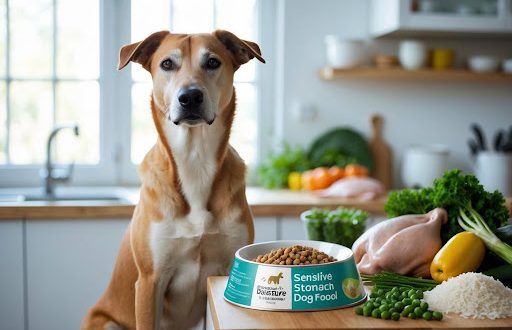
When a dog experiences digestive issues, choosing the right food can make a significant difference. Sensitive stomach dog food is specially formulated dog food designed to include easy-to-digest ingredients that help reduce intestinal upset and improve overall digestion. These diets often avoid common allergens and irritants, providing a gentle option for dogs with sensitivities.
Understanding how sensitive stomach dog food works begins with recognizing the unique nutritional needs of dogs with delicate digestive systems. Ingredients such as specific proteins, digestible carbohydrates, and added fiber can all play a role in alleviating discomfort and promoting better gut health.
Pet owners can help their dogs thrive by selecting food that matches their specific dietary requirements. With the right choice, dogs can enjoy a happier and healthier life, free from the discomfort of a sensitive stomach.
What Is Sensitive Stomach Dog Food?
Sensitive stomach dog food is a specialized type of diet designed to support dogs that experience digestive issues. This type of dog food is designed to be gentle on the stomach and is made from easily digestible ingredients that can help reduce gastrointestinal discomfort for dogs.
Definition and Purpose
Sensitive stomach dog food is formulated specifically for pets with delicate digestive systems. These foods often contain limited ingredients that are less likely to irritate the stomach. They typically include high-quality proteins, like chicken or fish, and digestible carbohydrates such as rice or sweet potatoes. Its main purpose is to help reduce symptoms such as vomiting, diarrhea, and gas.
Additionally, many sensitive stomach formulas have added probiotics or prebiotics. These components help promote a healthy gut by balancing the digestive system. This means dogs can benefit from better nutrient absorption and overall improved digestive health.
Difference From Regular Dog Food
Unlike regular dog food, which may contain various fillers and ingredients, sensitive stomach dog food focuses on simplicity. Regular dog food may contain common allergens like corn, soy, or dairy, which might upset sensitive gastrointestinal tracts.
Sensitive stomach varieties avoid these common irritants and emphasize digestibility. They often come in specialized formulas, like wet or dry food, tailored to specific dietary needs. For example, some products may have lower fat content, making them easier for sensitive stomachs to process. The key difference lies in the ingredient quality and the specific health goals of sensitive stomach diets.
Why Some Dogs Need Sensitive Stomach Diets
Some dogs may require sensitive stomach dog food due to specific health issues or food sensitivities. Signs such as frequent vomiting, diarrhea, or bloating are common indicators that a dog might benefit from these specialized diets.
Certain breeds are more prone to digestive problems, while older dogs may also experience changes in their stomach sensitivity. Stress, dietary changes, or food allergies can trigger issues in otherwise healthy dogs.
Veterinarians often recommend sensitive stomach dog food to help manage these problems. This approach allows dogs to maintain better health and comfort through proper nutrition tailored to their unique needs.
How Sensitive Stomach Dog Food Supports Digestion

Sensitive stomach dog food is designed to provide easy-to-digest ingredients that support a dog’s digestive health. This type of food often focuses on limited ingredients and specific protein and fat sources to minimize irritation and promote healthier digestion. Understanding these aspects can help dog owners choose the best food for their pets.
Role of Highly Digestible Ingredients
Highly digestible ingredients are important for in supporting digestion. These ingredients are selected for their ability to be broken down easily in the gastrointestinal tract. Common sources include easily digestible proteins like chicken and turkey, along with gentle carbohydrates such as rice and oatmeal.
- Benefits of Digestibility:
- Reduces digestive strain: Easier breakdown helps prevent gas, bloating, and discomfort.
- Improves nutrient absorption: When ingredients are more digestible, nutrients are absorbed more efficiently.
Dog owners should look for sensitive stomach dog food that includes that list these ingredients prominently on the label to ensure better digestive results.
Limited Ingredient Dog Food Explained
Limited ingredient sensitive stomach dog food usually contains fewer components, focusing on a small number of carefully chosen ingredients. This approach is particularly beneficial for dogs with food sensitivities or allergies.
- Key benefits include::
- Simplicity: Fewer ingredients mean less chance of triggering an adverse reaction.
- Quality over quantity: Each ingredient in these formulas is often selected for its digestibility and nutritional value.
Limited ingredient diets can help identify food triggers by minimizing the number of variables. This clarity makes it easier for owners to observe how their dog reacts to food changes.
Importance of Protein and Fat Sources
The type of protein and fat in a dog’s diet can significantly influence digestive health. High-quality proteins, such as lamb, salmon, or turkey, are preferred because they are less likely to cause stomach upset.
- Specific Sources:
- Proteins: Single-source proteins are ideal for sensitive dogs, allowing for easier digestion.
- Fats: Balanced, moderate fat levels are important. Healthy fats, like fish oil, promote a shiny coat and support gut health without overwhelming the digestive system.
Choosing the right protein and fat sources helps maintain a stable digestion process, easing discomfort and promoting overall wellbeing.
Common Ingredients in Sensitive Stomach Formulas
Sensitive stomach dog foods are designed with specific ingredients that promote digestive health. They feature proteins that are easy to digest and carbohydrates that provide energy without causing upset. The right additives and the absence of unwanted fillers are also crucial in these formulas.
Novel and Single Animal Proteins
Many sensitive stomach dog food formulas use novel or single animal proteins. These proteins come from sources like fish, duck, or kangaroo, which are less likely to trigger allergies. Chicken and turkey are common as well, providing easily digestible options. Brands like Wellness Simple Limited Ingredient focus on a limited number of protein sources to minimize digestive issues.
Using single animal proteins simplifies the diet, making it less likely for dogs to react poorly to the food. This is particularly important for dogs with known sensitivities to common ingredients. By choosing dog foods that prioritize these proteins, owners can help their pets maintain a balanced diet while reducing discomfort.
Easily Digestible Carbohydrates
Carbohydrates in sensitive stomach formulas are selected for their digestibility. Options like white rice, sweet potatoes, and pumpkin are often included. These ingredients provide essential fiber and energy without overwhelming the digestive system. For example, Royal Canin Digestive Care often incorporates rice, which helps firm up stools and ease digestion.
Simple carbohydrates support gut health and play a vital role in maintaining regularity. The goal is to support nutrient absorption while avoiding complex ingredients that could lead to gas or bloating. When selecting a dog food, checking for these digestible carbohydrates ensures it will be gentle on sensitive stomachs.
Supplemental Probiotics and Prebiotics
Probiotics and prebiotics are crucial additions to sensitive stomach dog food. Probiotics are beneficial bacteria that help regulate gut health, while prebiotics serve as food for these bacteria. Many brands, such as Blue Buffalo Basics Limited Ingredient, include these supplements to foster a healthy digestive environment.
Including these elements can significantly improve digestion and help prevent future digestive issues. They work together to maintain a balanced microbiome, creating a more resilient gut. Adding these ingredients can lead to better nutrient absorption and overall comfort for dogs with sensitive stomachs.
Avoidance of Fillers and Artificial Additives
Sensitive stomach dog foods should avoid common fillers and artificial additives. Ingredients like corn, soy, and wheat are often excluded due to their potential to cause sensitivities. Additionally, artificial colors, preservatives, and flavors can irritate the digestive system.
A cleaner label translates to a smoother digestion process. Focusing on high-quality, natural ingredients is essential for dog foods aimed at sensitive stomachs. Many premium brands prioritize this approach to ensure their products meet the specific needs of sensitive dogs, promoting health and comfort with every meal.
Types of Sensitive Stomach Dog Food Options
There are several types of sensitive stomach dog food formulated for pets with sensitive stomachs. These options include veterinary-prescribed diets, popular commercial brands, and homemade meal solutions. Each category provides unique benefits tailored to specific dietary needs.
Prescription and Veterinary Formulas
Prescription dog foods are designed by veterinarians for pets with specific health issues, including sensitive stomachs. Brands like Hill’s Science Diet Sensitive Stomach focus on high digestibility, using easily absorbed ingredients. These formulations often contain added prebiotics to support gut health. Another option is Royal Canin Digestive Care, which contains fibers that help promote a balanced digestive tract. Prescription formulas may be necessary for dogs with underlying health problems, and they are typically more effective in easing severe symptoms of digestive distress.
Popular Commercial Brands
Many commercial brands offer sensitive stomach dog food that provide balanced nutrition without needing a veterinary prescription. Blue Buffalo Basics Limited Ingredient focuses on using a few select ingredients to minimize digestive irritation. Wellness Simple Limited Ingredient also prioritizes easy-to-digest proteins and carbohydrates, which is crucial for sensitive dogs. Another notable brand is Instinct, which emphasizes raw nutrition and natural ingredients, making it easier for the gut to process. These options are widely available and can be found in most pet stores or online.
Homemade Dog Food Solutions
Some pet owners prefer preparing homemade sensitive stomach dog food making homemade dog food for their sensitive pets. This approach allows for complete control over ingredients, ensuring no fillers or allergens are included. Recipes for homemade dog food for sensitive stomachs typically include cooked meats, rice, and certain vegetables. Common ingredients are chicken, turkey, or fish combined with sweet potatoes or pumpkin. It is essential to consult with a veterinarian when creating homemade meals, as they can ensure all nutritional needs are met. Careful ingredient selection is key to preventing further stomach upset while providing a balanced diet.

Transitioning to Sensitive Stomach Dog Food
Switching to sensitive stomach dog food requires a careful approach. A gradual transition helps prevent digestive upset and allows the dog’s system to adjust smoothly. The following steps focus on how to switch diets safely while monitoring progress and addressing any ongoing digestive issues.
Steps for Switching Diets Safely
When changing to a sensitive stomach dog food, it’s essential to follow a gradual transition plan over 7 to 10 days. This approach helps avoid any shock to the digestive system.
- Days 1-3: Start with 75% old food and 25% new sensitive stomach food.
- Days 4-6: Change the mix to 50% old food and 50% new food.
- Days 7-9: Increase to 75% new food and 25% old food.
- Day 10: Feed 100% of the new sensitive stomach formula.
During this period, it’s important to monitor the dog’s stool quality and behavior. If the dog shows signs of digestive distress, like loose stools or vomiting, slowing down the transition may be necessary.
Monitoring For Improvements
After the transition, the focus shifts to observing the dog’s overall health and well-being. Signs of improvement might include:
- Better Stool Quality: Consistency may improve, becoming firmer and more regular.
- Reduced Vomiting: Fewer incidents of vomiting suggest better digestive tolerance.
- Increased Energy: The dog might appear more energetic and less lethargic.
Keeping a close eye on these changes can help determine if the new food is effective. If issues persist after transitioning, it may be time to consult with a veterinarian to assess other potential underlying causes or to try different dog food options specifically formulated for sensitive stomachs.
Addressing Persistent Digestive Issues
If digestive problems continue after switching to sensitive stomach dog food, further investigation is needed. Persistent issues are often not just about food changes. Here are some steps to consider:
- Consult a Veterinarian: They can identify underlying health concerns that could contribute to ongoing digestive issues.
- Consider Food Ingredients: Ingredients in some sensitive stomach formulas may still trigger sensitivities. Look for high-quality proteins and avoid common allergens like corn, wheat, and soy.
- Explore Alternative Diets: If a specific brand isn’t working, trying another sensitive formula or even a limited-ingredient diet might be necessary.
It’s vital to remain patient and willing to adapt the dog’s diet as needed. Monitoring the dog’s response to changes will guide the owner in finding the best solution for their pet’s health and comfort.
When to Seek Veterinary Guidance
Dogs that require sensitive stomach dog food can experience a range of digestive issues. Recognizing when to seek veterinary help is crucial for their health. Several factors can indicate that a visit to the vet is necessary, including ongoing symptoms, underlying medical conditions, and the need for tailored dietary guidance.
Identifying Ongoing Symptoms
Persistent digestive problems should not be ignored. If a dog shows signs such as:
- Frequent vomiting or diarrhea
- Consistent bloating or gas
- Loss of appetite
- Weight loss
These symptoms may indicate a more serious issue. He should not simply be expected to “outgrow” these problems. Ongoing discomfort can affect a dog’s overall well-being, leading to anxiety or behavioral changes. If any of these symptoms last more than a day or two, it is important to consult a veterinarian. A prompt examination can help identify the root cause and avoid potential complications.
Medical Conditions That Mimic Food Sensitivity
Sometimes, other medical conditions can present symptoms similar to food sensitivities. Issues like infections, parasites, or inflammatory bowel disease (IBD) can impact digestion. These conditions may require specific treatments rather than dietary changes. Certain breeds may also be predisposed to gastrointestinal issues that mimic food intolerance. A thorough inquiry and examination by a veterinarian can help determine if underlying conditions are present.
Owners should avoid making assumptions about their dog’s health based solely on dietary responses. Testing may be necessary to differentiate food sensitivity from other health problems. Veterinarians use stool samples, blood tests, or imaging to provide a clear diagnosis.
Working with Your Veterinarian
When dealing with a dog that has a sensitive stomach, collaborative care is essential, especially when selecting the right sensitive stomach dog food. It starts with an open dialogue. Owners should clearly communicate what symptoms the dog exhibits and any recent changes in diet, including any sensitive stomach dog food being introduced. Regular visits to the veterinarian can ensure the dog gets the right dietary recommendations.
Veterinarians may suggest a limited-ingredient diet, often a type of sensitive stomach dog food, to identify potential food sensitivities. They can guide the owner on how to safely transition to new foods and choose the most suitable sensitive stomach dog food. Additionally, regular monitoring of the dog’s response to any diet changes is crucial. Keeping a journal of symptoms and diet, including details about the sensitive stomach dog food used, can greatly assist veterinarians in making informed recommendations.